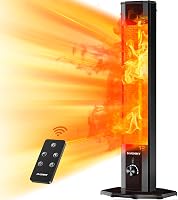
Are Electric Patio Heaters Expensive to Run?
Electric patio heaters can cost more to run than a small indoor heater because many use 900 to 1,500 watts. Your cost depends on the heater’s wattage, how long it runs, and your electricity rate.
On this page (6 sections)
Electric patio heaters can be expensive to run when they use 900 to 1,500 watts for several hours. Your cost depends on wattage, run time, and your electricity rate, so check those three figures before deciding whether electric heat fits your patio.
A simple estimate helps: divide watts by 1,000 to get kilowatts, then multiply by hours used and your rate per kilowatt-hour. A 1,500-watt heater running for 2 hours uses 3 kilowatt-hours; multiply 3 by the rate on your bill to estimate that session’s energy cost.
Are electric patio heaters expensive to run compared with gas?
Electric heaters can add up during long sessions, while gas heaters have fuel costs of their own. Compare the energy each option uses over the time you expect to sit outside, along with the convenience and installation needs.
Electric models avoid propane tanks and open flames, but they draw electricity while heating. Gas models need fuel, and their running cost depends on how often you use them and the fuel you buy.
The choice also depends on where the heater will go. Our guide to electric vs gas patio heaters compares the tradeoffs, while types of patio heaters explains the main formats.
How do you estimate an electric patio heater’s running cost?
Multiply kilowatts by hours of use and your electricity rate. The result estimates energy cost for that session, before any taxes or fixed charges on your bill.
Use this formula:
Watts ÷ 1,000 × hours × rate per kilowatt-hour = estimated energy cost
For example, a 900-watt heater running for 2 hours uses 1.8 kilowatt-hours. A 1,500-watt heater running for the same time uses 3 kilowatt-hours.
Use the rate shown on your electric bill. If your plan has different rates at different times, use the rate that applies when you plan to run the heater.
Does a lower heat setting reduce electricity use?
A lower setting can reduce energy use if it lowers the heater’s wattage. Check the power levels in the specifications instead of assuming that a “low” setting has a particular cost.
The Haimmy 42-Inch Infrared Patio Heater offers 9 heat levels from 620 to 1,500 watts. Its lower settings give you options to use less power than running it at full output.
A lower setting may not feel warm enough for your space or conditions. Start with the lowest level that feels comfortable, then adjust as needed.
Which heater wattage is a better fit?
Choose wattage based on the area and warmth you need, then estimate the cost for your usual session. A lower-wattage heater uses less electricity per hour, but it may not suit the space or the way you use it.
The SereneLife 900W Infrared Patio Heater uses 900 watts and has a stated heating range of 15 sq. ft. That can make it a more targeted option for a smaller seating area.
The Danluke 1500W Wall-Mount Patio Heater uses 1,500 watts and runs on 120V power. Its wall-mounted design can suit a covered patio or deck where keeping floor space open matters.
Neither wattage alone guarantees comfort across a whole patio. Consider the location, mounting options, and how directly the heat reaches your seating area.
Do infrared patio heaters cost less to run?
Infrared heating doesn’t automatically mean lower electricity use. Wattage and run time determine energy use; infrared describes a heating method that sends radiant warmth toward people and nearby surfaces.
This focused heat can suit a seating area better than trying to warm all the air outdoors. It still uses electricity, so include the heater’s wattage in your estimate.
For more choices, see our guide to best outdoor electric heaters. If you’re considering a mounted model, compare ceiling-mounted and hanging patio heaters for placement options.
How can you keep electric patio heater costs down?
Use the heater only while you need it, and choose the lowest comfortable setting. Shorter sessions and lower wattage reduce the electricity used.
A timer can help limit run time. The Haimmy has a timer that can be set from 1 to 9 hours, and its heat levels range from 620 to 1,500 watts.
Place the heater so its warmth reaches the seating area, following the manual’s clearance and installation directions. Safe placement matters as much as choosing a lower power setting; read how to heat a covered patio safely before mounting or using a heater under a roof.
Avoid using a heater to compensate for an exposed, windy space if the warmth does not reach the people sitting there. The guide to whether patio heaters work on a cold night covers what to expect from outdoor heating.
When does an electric patio heater make sense?
Electric heat can make sense when you have a suitable outlet, want focused warmth, and use the patio for limited sessions. Estimate the cost for your expected hours, then compare that figure with your gas alternative.
A lower-wattage model may fit a small area and shorter use. A 1,500-watt model can suit a larger or wall-mounted setup, but it will use more energy per hour at full power.
If you’re deciding whether electric patio heaters are expensive to run, start with the wattage and your typical session length. Choose a 900-watt heater for a smaller area if its range fits, or consider a 1,500-watt heater when its placement and output suit your patio.
For a broader buying decision, see what patio heater is best for your space.
Frequently asked questions
Are electric patio heaters expensive to run?
They can be, especially at full power for several hours, because a 1,500-watt heater uses 1.5 kilowatt-hours per hour. Multiply that amount by your electricity rate and run time to estimate energy cost; a lower-wattage setting or shorter session uses less electricity.
How much electricity does a 1,500-watt patio heater use?
A 1,500-watt heater uses 1.5 kilowatt-hours for each hour it runs at full power. For example, 2 hours uses 3 kilowatt-hours.
Your bill impact depends on the rate on your electric bill and whether the heater cycles or runs continuously.
Are infrared patio heaters cheaper to run?
Infrared describes how the heater transfers heat, not the amount of electricity it uses. Compare wattage and run time to estimate energy use, then consider whether focused warmth suits the people and area you want to heat.
Do electric patio heaters use a lot of power?
Many plug-in patio heaters use 900 to 1,500 watts, so they draw substantial power while running. A 900-watt model uses 0.9 kilowatt-hours per hour, while a 1,500-watt model uses 1.5; check the heater’s wattage and your circuit before use.