Can You Use a Propane Patio Heater on a Wood Deck?
You can use a propane patio heater on a wood deck only if its manual allows it and you can meet every clearance and placement rule. Keep it outdoors on a stable, level surface, away from combustibles, and never leave it running unattended.
On this page (9 sections)
- Can you use a propane patio heater on a wood deck?
- What should you check before setting it up?
- Does a deck surface need extra protection?
- Can you use a propane heater under a covered deck?
- How should you handle the propane tank and heater?
- What should you do while the heater is running?
- Could an electric heater work better on a wood deck?
- Which heater fits a deck setup?
- What is the safe decision for a wood deck?
You can use a propane patio heater on a wood deck only if its manual allows it and you can meet every clearance and placement rule. Keep it outdoors on a stable, level surface, away from the house, railings, furniture, and other combustibles.
The deck material alone doesn't determine whether a setup is safe. The heater's instructions, nearby surfaces, overhead cover, wind, and how the heater is secured all matter.
Can you use a propane patio heater on a wood deck?
Sometimes, if the manufacturer permits deck use and the setup meets the manual's requirements. Check the instructions for minimum distance from walls, railings, ceilings, and other objects, plus rules for surface, wind, and anchoring.
Don't assume a heater is safe just because it has a weighted base or tip-over shutoff. Those features address specific risks, but they don't make close placement or a combustible surface acceptable.
Keep the heater outside in an open area. Don't use it in a garage, enclosed porch, or other closed space, where combustion exhaust can build up.
Our guide to patio heater safety on a patio or deck explains the broader placement checks to make before turning on any outdoor heater.
What should you check before setting it up?
Read the manual for your exact heater before placing it on the deck. Confirm that the model is approved for the location and note the required clearances, surface rules, assembly steps, and operating limits.
Then inspect the deck. It should be level, firm, and in good condition, without loose boards or a slope that could affect stability.
Keep the heater away from combustible items such as cushions, curtains, dry leaves, and stored fuel. Clear a walking path around it so people won't brush against it or knock it over.
If you can't meet the required clearances, don't use that spot. Choose another outdoor location or a different heating method that fits the space.
How much clearance does a propane patio heater need on a wood deck?
Use the clearance distances stated in the heater manual; there isn't one universal distance for every model. Measure from the heater's hot parts to the nearest wall, railing, ceiling, furniture, and other combustible material.
Don't estimate by eye or copy a distance from a different heater's instructions. If the manual doesn't clearly cover your deck or overhead structure, contact the manufacturer before operating it there.
Does a deck surface need extra protection?
Follow the manual's surface instructions and keep the heater upright on a stable base. A noncombustible pad may be appropriate only when the manufacturer permits it and the pad is rated for the conditions.
A mat or tile doesn't cancel the clearance rules or make a weak, uneven deck suitable. Don't put the heater on a rug, soft surface, or anything that can slide or tilt.
Watch the deck during initial use from a safe distance. Turn the heater off if you see scorching, smoke, discoloration, or damage, then let it cool before inspecting the area.
The Hykolity 50,000 BTU Sand Box Patio Heater has wheels and a water tank that can be weighted, according to its product details. That doesn't confirm it is approved for your deck, so check its instructions and placement requirements first.
Can you use a propane heater under a covered deck?
Only if the specific heater's manual permits covered use and the setup meets its overhead clearance rules. A covered deck can trap heat and restrict airflow, so an open side or nearby door doesn't automatically make the location acceptable.
Never operate a propane patio heater in an enclosed or partly enclosed space unless the manufacturer explicitly allows that exact use. Keep the heater away from low ceilings, beams, awnings, and other overhead materials.
For a roofed space, see how to heat a covered patio safely. If the manual excludes covered locations, choose an open area or a heater designed for the intended mounting and setting.
How should you handle the propane tank and heater?
Keep the propane tank upright, connected as instructed, and away from heat sources. Check hoses and connections for damage before use, and follow the maker's steps for lighting, shutdown, and tank changes.
Don't move a lit or hot heater. Turn it off, let it cool, and then move it using the method the manual describes.
Close the tank valve when the heater isn't in use. Store and handle spare cylinders according to the cylinder and heater instructions, away from the heater and other ignition sources.
If you need to confirm which cylinder fits your model, read what size propane tank a patio heater uses.
What should you do while the heater is running?
Stay nearby and keep children, pets, and foot traffic clear of the heater. Don't leave it operating while you go indoors or fall asleep, and don't use it to dry clothing or warm stored items.
Pay attention to changing wind and weather. Strong gusts can affect stability or flame behavior, so shut it down if conditions exceed the limits in the manual.
Stop use if you smell gas, hear a leak, see an unusual flame, or notice damage. Follow the maker's shutdown and troubleshooting instructions, and contact a qualified service professional if the problem continues.
Propane combustion can produce carbon monoxide. Read whether propane patio heaters give off carbon monoxide and follow the safety guidance for your heater and location.
What if the heater starts to tip?
Follow the manual's emergency instructions and keep clear of the heater. A tip-over shutoff may stop the flame on some models, but don't assume it prevents damage or makes the heater safe to right while hot.
Once the heater is off and cool, inspect it and the deck for damage. Don't use it again until you know it is stable and the maker's instructions allow operation.
Could an electric heater work better on a wood deck?
An electric heater can avoid a propane flame, but it still needs safe clearance and suitable outdoor use. Check the model's instructions for placement, weather exposure, electrical supply, and whether it can be used on a deck.
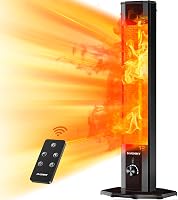
The Hykolity 38.5-Inch Standing Electric Heater is described as an indoor and outdoor infrared model with tip-over and overheat protection. Those features don't replace the need to follow its instructions or keep it away from combustible materials.
Choose electric only if you can safely route power and the heater is approved for the location. For a broader comparison, see electric versus gas patio heaters.
Which heater fits a deck setup?
The right choice depends on the manual's location rules and the clear space on your deck. A propane model needs suitable outdoor placement, tank handling, and clearances; an electric model needs approved outdoor use and a safe power connection.
The Pamapic 89-Inch Pyramid Patio Heater is a propane tower with wheels, a weighted base, and several shutoff protections described by the brand. Confirm its instructions allow your deck and overhead arrangement before considering it.
Don't pick by appearance or portability alone. If no model fits the clearances and surface rules for your deck, don't put a patio heater there.
What is the safe decision for a wood deck?
For a propane patio heater on a wood deck, use it only when the manual permits that location and every clearance, stability, and ventilation rule can be met. Keep it outdoors, upright, away from combustible items, and attended while running.
Choose an open area if overhead cover or tight spacing makes the deck unsuitable. If you can't confirm the setup, contact the manufacturer or choose an electric model approved for the space.
Review patio heater safety before use, and check your heater's instructions each time you change its location.
Frequently asked questions
Can a propane patio heater damage a wood deck?
Yes, heat, flame, or a hot part may damage wood or nearby items if the heater is too close or used against its instructions. Follow the model's clearance rules, keep it upright on a stable surface, and stop using it if the deck is scorching, smoking, or changing color.
Can I use a propane patio heater under a covered deck?
Only if the heater's manual specifically permits that location and you can meet its overhead and side clearances. Keep the space open to outdoor air, since propane combustion creates carbon monoxide.
Never use an outdoor heater in an enclosed porch, garage, or other closed space.
Should I put a mat under a propane patio heater on a deck?
Use a mat only if the heater maker permits it and the mat is rated for the heat and outdoor use. A mat does not make an unstable deck safe or replace required clearances.
Keep the base level and don't place the heater on a rug or surface that can shift.
Is an electric heater safer for a wood deck?
An electric infrared heater avoids an open propane flame, but it still gets hot and must be used as its instructions allow. Check its required clearance, outdoor rating, electrical connection, and placement rules.
For instance, the Hykolity standing electric heater has tip-over and overheat protection, but those features don't replace safe placement.