When Is a Patio Heater Needed?
A patio heater is needed when you plan to sit outside below about 60°F and want to stay comfortable without adding layers. It also earns its place when evening temperatures drop after sunset or when wind makes the air feel colder than the thermometer shows.
On this page (10 sections)
- What temperature makes a patio heater worthwhile?
- Which outdoor spaces actually need added warmth?
- When does the time of day call for a heater?
- How much warmth does a gas or electric heater add?
- Is a patio heater needed on a covered porch or balcony?
- How do you decide between gas and electric heat?
- How should you use and store a heater on cool evenings?
- When should you skip a patio heater?
- What else should you weigh before buying?
- So, when is patio heater needed?
A patio heater is needed when you plan to sit outside below about 60°F and want to stay comfortable without adding layers. It also earns its place when evening temperatures drop after sunset or when wind makes the air feel colder than the thermometer shows.
The short answer is that you need one whenever the evening air makes sitting still uncomfortable. That point arrives at different temperatures for different people and different spaces.
Below is how to judge when is patio heater needed for your own patio, porch or balcony.
What temperature makes a patio heater worthwhile?
Plan on a heater once evening temperatures fall below 60°F. That is the range where most people sitting still start to feel chilled, even in a light jacket.
Above 65°F, few people reach for added heat.
Wind changes the calculation. A 10 mph breeze can make a 55°F evening feel several degrees colder, and that is when a heater helps most.
Humidity matters too, since damp air feels colder against the skin than dry air at the same reading.
Your own comfort is the real measure. If you find yourself cutting evenings short or wrapping in a blanket to stay out, the temperature has already crossed the line where a heater pays off.
A thermometer on the patio gives you a better read than a forecast for the nearest town.
Which outdoor spaces actually need added warmth?
A patio heater helps most in spaces where people sit still for an hour or more. Dining tables, lounge seating and conversation corners all qualify.
A space used only for passing through does not need one.
Open yards lose heat quickly, so a gas tower with a wide radius suits them best. Covered porches and gazebos hold warmth longer but need ventilation for gas models.
Balconies and small courtyards work well with a compact electric tower that heats the person in front of it.
Seating layout decides as much as the space itself. A tight circle of chairs traps warmth and feels comfortable sooner than chairs spread wide apart.
Our guide to hanging vs standing patio heater covers how mounting changes where that warmth lands.
When does the time of day call for a heater?
Late afternoon and after sunset are the usual heater hours. The ground and surfaces hold daytime heat, then release it as the sun drops.
That is why a 4 pm patio can feel warm while the same spot at 8 pm feels cold.
The drop is sharpest on clear evenings, when heat escapes quickly once the sun is gone. Cloud cover slows the loss.
A patio facing west stays warm longer than one in shade from early afternoon.
Plan the switch-on time around your usual sitting hours. If you host dinner outside, the heater should be running before guests sit down so the seating area feels comfortable from the first minute.
An electric infrared unit heats almost at once, while a gas tower takes a short while to settle into steady output.
How much warmth does a gas or electric heater add?
A gas tower adds broad heat over a wide area, while an electric infrared unit heats people in its direct line. The right choice depends on how many people sit out and how open the space is.
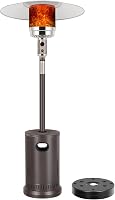
The Amazon Basics 46,000 BTU Propane Patio Heater throws heat across about a 9-foot radius. That makes it a fit for a dining set or a group of chairs in an open yard.
It runs on a 20 lb liquid propane tank, which is not included, and its adjustable knob lets you dial the output down as the evening warms.
The Haimmy 42-Inch Infrared Patio Heater runs on 1,500 watts and heats by direct radiant warmth. It offers 9 heat levels from 620W to 1500W and a 1-9 hour timer.
Because it heats people rather than air, it suits a covered porch or a balcony where you sit close to the unit.
Both need an outdoor setting. A gas model needs ventilation and clearance from combustible materials, while the electric unit carries IPX5 water resistance for outdoor use.
Our look at portable outdoor heaters compares more models for small spaces.
Is a patio heater needed on a covered porch or balcony?
Yes, if you sit out there on cool evenings, but the space decides the type. A covered porch holds warmth better than open ground, so less output goes further.
The trade-off is ventilation and clearance.
Gas heaters release exhaust, so a fully enclosed porch is not a safe spot for one. An open-sided porch or a gazebo with airflow works.
Electric infrared heaters avoid that issue and are the simpler choice for a balcony with close neighbors.
Clearance matters in both cases. Keep the heater away from fabric, plants and furniture, and check the unit's guidance before placing it.
If you plan to put a gas model on a timber deck, read can you use a propane patio heater on a wood deck first.
How do you decide between gas and electric heat?
Pick gas for open space and groups, and electric for covered spots and close seating. Gas gives more raw output and a wider spread.
Electric is quieter, needs no fuel tank and heats almost instantly.
Gas costs less per hour of heat in most cases, but you carry and store a propane tank. Electric needs an outdoor-rated outlet near the patio, which limits where you can place it.
Neither type heats the whole yard, so match the unit to where people actually sit.
Think about the shoulder seasons in your area. If you host outside from spring through fall, a gas tower earns its keep.
If cool evenings are occasional, a lighter electric model is easier to store. Our review of heaters for a pergola covers placement under open structures.
How should you use and store a heater on cool evenings?
Run the heater only while people are outside, and store or cover it when the evening ends. That keeps fuel use down and protects the unit from weather between uses.
Keep the seating area arranged so people sit within the unit's heat. For a gas tower, position it so the 9-foot radius covers the chairs.
For an infrared tower, aim the panel toward the seats rather than open air. Adjust output as the evening cools or warms.
A waterproof cover protects the heater when it is not in use. The Hualedi Patio Heater Covers Outdoor Waterproof measures 89 in high with a 33 in dome and a 19 in base, and its zipper makes covering simple.
The cover's material guards against wind, dust, snow and sun between cool evenings.
Before each season, check the burner or heating element for dust and damage. For a gas unit, test the tank connection outdoors before lighting.
An electric tower should go on a stable base away from standing water.
When should you skip a patio heater?
Skip one if your evenings rarely fall below 60°F or if your outdoor space is fully enclosed. In warm climates, a heater adds little over most of the year.
In a sealed room, a gas unit is unsafe and an electric one offers no outdoor benefit.
Skip gas too if you cannot store a propane tank safely. Skip electric if there is no outdoor outlet near the seating area and you do not want an extension cord across the patio.
Neither case is a problem if you plan the space first.
Renters in shared buildings may find a small infrared tower easiest to move and store. Households that host often and have open yard space usually get more from a gas tower.
For a pergola, a hanging or wall-mounted option can free up floor space.
What else should you weigh before buying?
Check clearance, ventilation, fuel or power access, and storage before you commit. These four points decide whether a heater works in your space more than the output figure does.
Clearance keeps the unit away from walls, furniture and plants. Ventilation matters for gas, and power access matters for electric.
Storage keeps the heater safe and dry when the season ends, which a cover handles well.
Think about where the heater sits when not in use. A tower takes floor space, while a tabletop model suits small balconies.
Measure your seating area so the heater's heat reaches the chairs without sitting in the walkway.
So, when is patio heater needed?
A patio heater is needed when cool evenings push you indoors before you are ready to stop sitting out. As a rule, that starts around 60°F, earlier when wind or damp air adds a chill.
Match the type to the space: gas for open yards and groups, electric infrared for covered porches and close seating.
Decide by your own evenings, not by the calendar. If you sit out in spring and fall, a heater extends those hours.
If your patio stays warm year round, skip it. For open-air group seating the Amazon Basics gas tower spreads heat furthest, while the Haimmy infrared tower suits porches and balconies.
Keep a cover on hand for storage, and check clearance before the first cool night. Then the patio stays usable well past the point where the air would otherwise send everyone inside.
Frequently asked questions
At what temperature do you need a patio heater?
Most people start wanting one when evening temperatures fall below 60°F. A gas model adds strong warmth for groups in open spaces, while an electric infrared unit heats people sitting close to it.
Can a patio heater make a cold evening feel warm?
It warms the people and surfaces in front of it rather than the whole yard. A propane tower with a 9-foot radius warms a seating circle, and an electric infrared tower warms whoever sits within its direct line of heat.
Do I need a patio heater in summer?
Usually not. Summer evenings in most regions stay warm enough for sitting out without added heat.
A heater is more useful in spring and fall, on cool coastal nights, and at high elevation where evenings drop quickly.
How much does a patio heater add to the evening temperature?
There is no fixed number, because the gain depends on wind, air temperature, how close you sit and the heater's output. A 46,000 BTU gas tower spreads heat over about a 9-foot radius, while a 1,500-watt infrared tower heats people within its direct line.
Is a patio heater safe to use on a covered porch?
Only with proper clearance and ventilation. A gas heater needs an open or well-ventilated area and distance from combustible materials.
An electric infrared model is easier on a covered porch, but keep it away from fabrics and follow its clearance guidance.
Should I cover a patio heater when it is not in use?
Yes, covering it keeps rain, dust and sun off the unit between uses. A waterproof cover sized to the heater's height and dome protects the finish and burner area, and it keeps the heater ready for the next cool evening.